
147. Insertion Sort List 对链表进行插入排序
【LeetCode】147. Insertion Sort List 解题报告(Python)
Section titled “【LeetCode】147. Insertion Sort List 解题报告(Python)”标签(空格分隔): LeetCode
作者: 负雪明烛 id: fuxuemingzhu 个人博客: http://fuxuemingzhu.me/
题目地址:https://leetcode.com/problems/insertion-sort-list/description/
Sort a linked list using insertion sort.
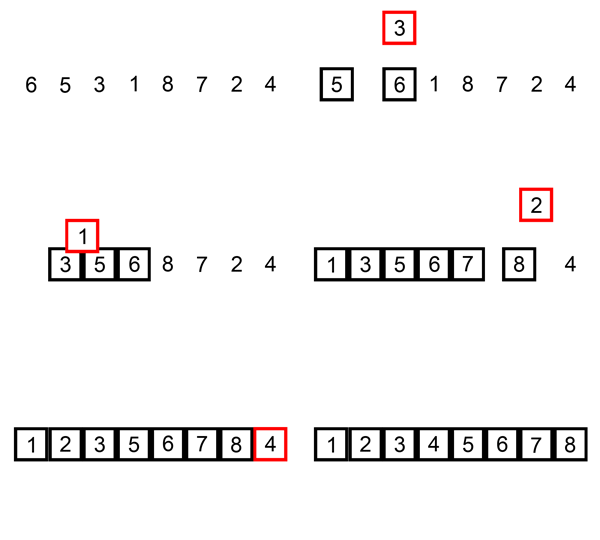
A graphical example of insertion sort. The partial sorted list (black) initially contains only the first element in the list. With each iteration one element (red) is removed from the input data and inserted in-place into the sorted list
Algorithm of Insertion Sort:
Insertion sort iterates, consuming one input element each repetition, and growing a sorted output list. At each iteration, insertion sort removes one element from the input data, finds the location it belongs within the sorted list, and inserts it there. It repeats until no input elements remain.
Example 1:
Input: 4->2->1->3Output: 1->2->3->4Example 2:
Input: -1->5->3->4->0Output: -1->0->3->4->5使用插入排序,对链表进行排序。
这个算链表里边的难题了,其实就是模拟题目中图的过程,稍微有点复杂的就是指针的操作。参考了:链表插入排序里的做法,链表操作多用几个指针就方便很多了。
# Definition for singly-linked list.# class ListNode(object):#     def __init__(self, x):#         self.val = x#         self.next = None
class Solution(object): def insertionSortList(self, head): """ :type head: ListNode :rtype: ListNode """ if not head or not head.next: return head root = TreeNode(0) root.next = head while head.next: if head.val <= head.next.val: head = head.next else: temp = head.next q = root head.next = head.next.next while q.next and q.next.val < temp.val: q = q.next temp.next = q.next q.next = temp return root.next2018 年 6 月 23 日 ———— 美好的周末要从刷题开始
评论与交流